Business mailbox
 Developer Center


 Business mailbox
 Developer Center
WRC 2026|OYMotion CEO Neo Ni: Anchoring Engineering Implementation, Closing the Loop From Core Components to Real‑World Scenarios
2026.08.24


Release time:2026.08.24 15:53 Views: Author:
Back to listReprinted from: Global Network
Global Network Tech Report, Reporter: Zheng XiangqiAt the OYMotion booth during the World Robot Conference 2026 (WRC 2026), dexterous hands performed repeated grasping motions, while 3‑jaw and 4‑jaw industrial grippers delivered stable demonstrations. Long queues formed in front of the lower‑body exoskeleton for on‑site trials. Together, these products represent OYMotion’s current “capability portfolio” — ranging from end‑effectors to wearable devices, all centered on engineering implementation. Neo Ni, CEO of OYMotion, told reporters: “At this WRC, we did not fully focus on pure humanoid robots. Instead, we prioritized engineering implementation, which constitutes our more urgent pursuit at this stage.”
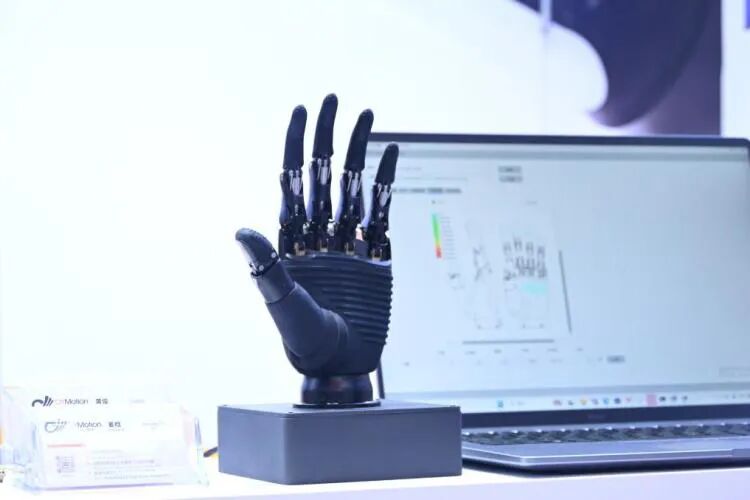
Within Neo Ni’s business roadmap, OYMotion is positioned primarily as a supplier of upstream core components and modules, with dexterous hands as its most representative offering. “Dexterous hands serve as a critical functional unit for robots to interact with the physical world. Next year will mark our tenth year developing dexterous hands.”
At this WRC, OYMotion exhibited its full dexterous‑hand product line, covering the ROHand full‑range series and the Lite series. Neo Ni explained that this tiered product lineup is a deliberate design: the AP001 weighs 640 grams and features rich hardware communication interfaces; the AP002 is engineered for real‑world deployment, completing full‑range motions in merely 0.7 seconds while balancing response speed and grasping payload; the AP003 is equipped with a 3D force‑sensing array capable of capturing micro‑force variations as low as 0.1 N; the Lite series cuts weight down to 457 grams and further lowers barriers for secondary development.
This comprehensive product gradient is translating into tangible changes in order structures. Neo Ni disclosed that OYMotion has three ongoing dexterous‑hand orders totalling several thousand units. In terms of customer base, approximately 90 % of partners remain in the POC (Proof‑of‑Concept) validation phase, while the 10 % of customers already deployed in real‑world scenarios generate substantial revenue. While scaling up its presence in the Chinese market, OYMotion has also advanced business operations in Japan, South Korea, Vietnam, Thailand, Germany, France, the United States and other regions. In his view, China’s capabilities in upstream core components for embodied intelligence are evolving into an indispensable force within the global industrial chain.
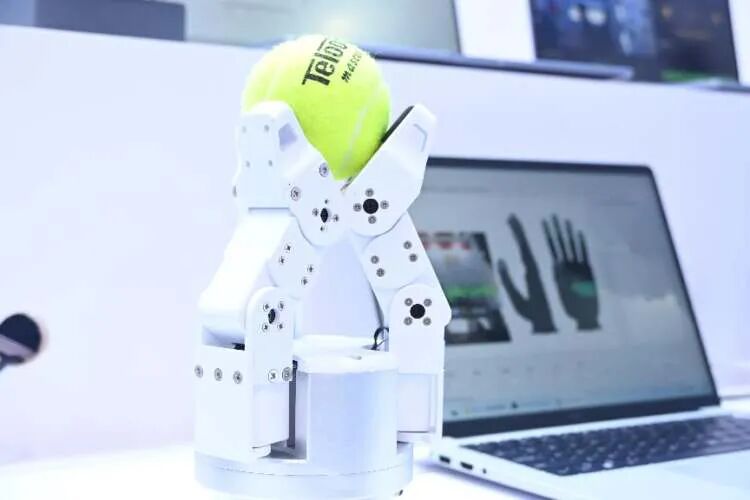
Beyond dexterous hands, OYMotion is applying the same scenario‑oriented mindset to additional end‑effectors. “Real‑world engineering deployment involves highly diverse use cases that demand correspondingly diverse solutions,” noted Neo Ni. “To satisfy functional and cost requirements across scenarios, we need to match each application with its appropriate solution.” Driven by this philosophy, OYMotion has developed 2‑jaw, 3‑jaw and 4‑jaw grippers. At this conference, it premiered its brand‑new industrial 3‑jaw actuator, suitable for component loading‑unloading, workpiece clamping and automated sorting, complementing its dexterous‑hand portfolio.
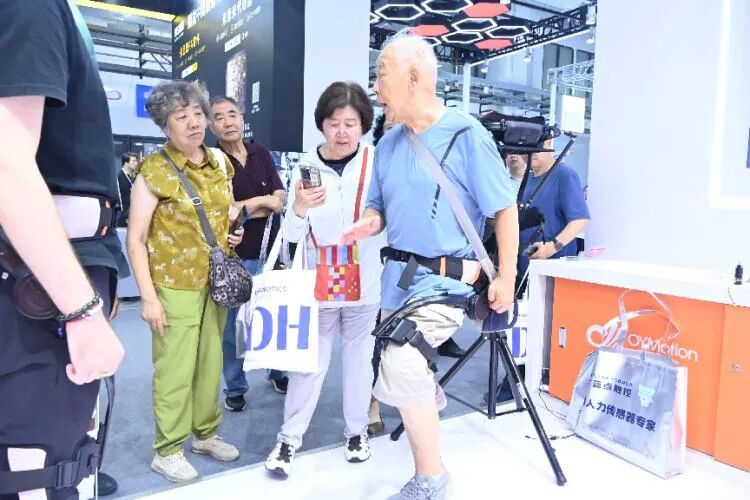
If dexterous hands represent one outward extension of OYMotion’s technological strengths, lower‑body exoskeletons embody the same underlying technologies adapted for alternative scenarios. “Exoskeletons share the same foundational technologies and competitive moat as our dexterous hands. Our years‑long accumulated expertise in motors, including electronic control, motors and reducers, finds direct application in exoskeletons,” stated Neo Ni. Starting from hip joints, OYMotion is expanding toward knee joints, spinal modules and shoulder joints, assembled in a Lego‑like modular fashion underpinned by mechatronic system designs.
“Compared with humanoid robots, exoskeletons may appear less spectacular, yet they address genuine existing demands,” Neo Ni elaborated. The product targets well‑defined user groups: elderly people with mobility impairments and populations requiring health‑rehabilitation support. Its deployment scenarios are equally concrete: physical augmentation for public‑security and fire‑fighting personnel, and mobility assistance for mountain‑tourism activities, delivering clear practical value today.
OYMotion has strategically streamlined its product design for exoskeleton commercialization. Early medical‑rehabilitation exoskeletons featured bulky systems and lengthy deployment cycles. Incorporating feedback from partners, the team streamlined functionalities to focus on solving specific pain points. “This reduces R&D complexity, curbs R&D and manufacturing costs, and better adapts to real‑world application requirements,” Neo Ni commented. Such streamlining reflects refinement of proven technical capabilities — stripping away redundant features and retaining core functions ready for deployment.
Upstream‑downstream collaboration also accelerates OYMotion’s product rollout. “At this year’s WRC, beyond showcasing our products, we paid close attention to developments among upstream and downstream partners,” said Neo Ni. “Despite high industry enthusiasm, stable large‑scale delivery is achieved only by teams willing to co‑refine products alongside industrial‑chain partners. OYMotion clarifies its capability boundaries and lets specialists handle specialized work.”
In Neo Ni’s assessment, the core bottleneck for embodied‑intelligence deployment lies in the “brain”. “Industrial‑chain capabilities covering motors, electronic control and low‑level motion control are relatively mature, yet significant gaps persist in high‑level artificial intelligence, which requires further time and accumulation. The public often underestimates the complexity of task comprehension: seemingly simple commands entail sophisticated semantic understanding and decision‑making for robots.”
Maturation of the “brain” hinges heavily on data. “Current large‑language models are built upon massive internet data accumulated over the past 30 years, whereas robot‑related data remains largely uncharted territory,” Neo Ni pointed out. The industry is exploring new approaches such as first‑person‑view data collection to fill this gap. OYMotion also provides its proprietary myoelectric‑signal acquisition solutions to data‑collection teams.
Looking ahead over the next five years, OYMotion pursues dual‑track objectives. In the short term, it aims to accelerate deployment of self‑closed‑loop products such as exoskeletons. According to Neo Ni, these products serve people’s livelihood needs directly, feature definite market demands and carry relatively manageable system complexity. In the long run, OYMotion will keep focusing on electronic control and key modules, while participating in selected solution development within its familiar sectors.
It is evident that OYMotion’s product portfolio — spanning upstream modules including dexterous hands to exoskeletons — follows a consistent logic: consolidate solid engineering capabilities first, then reuse these capabilities across diverse scenarios. As these capabilities keep accumulating within the industrial chain, embodied intelligence will make a more steady stride from demonstration prototypes toward mass production.
#OYMotion #ROHandDexterousHand #CoreComponents #Mechatronics #Exoskeleton #EngineeringImplementation #EmbodiedIntelligence
1234101.png)


5743082.png)
3217156.png)
2134943.png)
8471510.png)
7921439.png)

 Hotline
+86 2163210200
Email: info@oymotion.com
Sales: sales@oymotion.com
Support: faq@oymotion.com
Jobs: hr@oymotion.com
Alibaba:https://oymotion.en.alibaba.com/
Addr: No.788 Ziping Road, Pudong New Area, Shanghai China
Addr: Xihu International Plaza, 69 Wangjiang W. Rd, Shushan, Hefei
Addr: 5/F, Bldg B05, 82 Dinye Road, Zhuhai, PRC

WeChat:oymotion
Scan for more information